High-Q MLCC for RF Applications
0:59
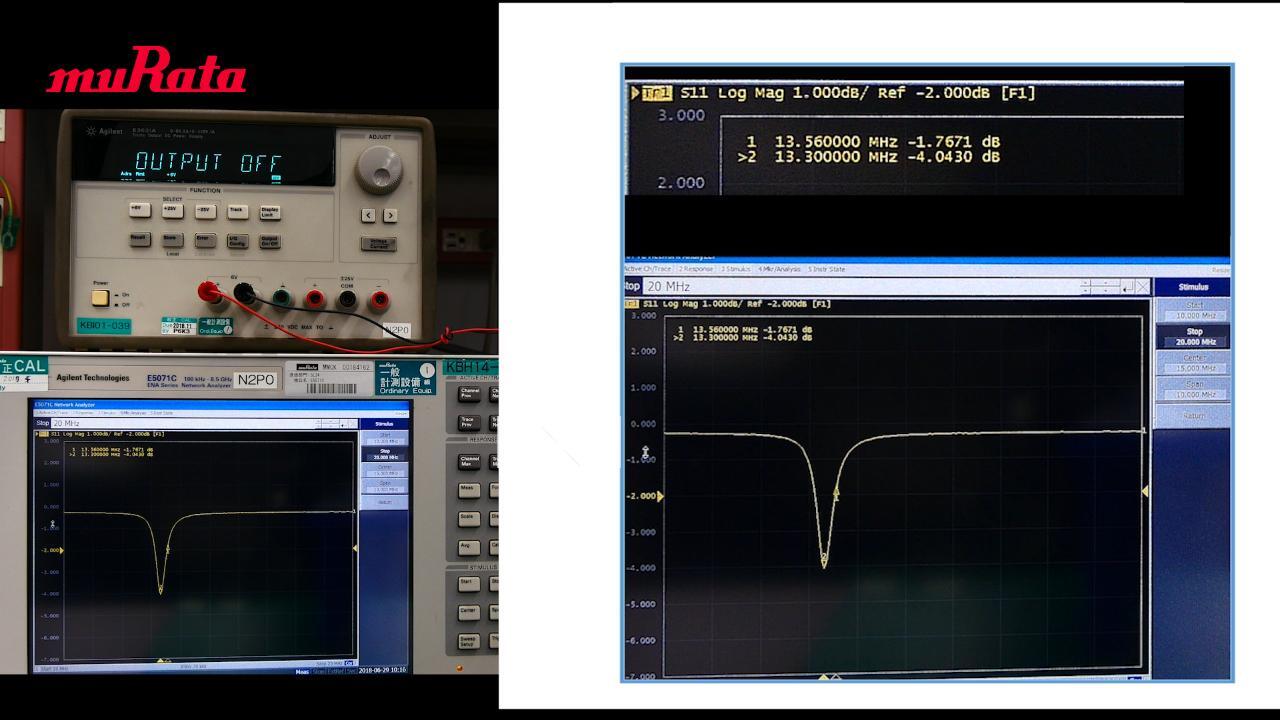
Murata’s High-Q Capacitors are ideal for RF and other high-power applications. These capacitors deliver high Q and lower ESR, allowing for higher current and lower losses. The High-Q series is stable over temperature and tight tolerance options are available.
Related Videos
In Capacitor
-
Play video Solving problems with the ECAS series: High capacitance and thin package
Solving problems with the ECAS series: High capacitance and thin package
A single Murata ECAS series polymer aluminum electrolytic capacitors with maximum capacitance of 470 μF and minimum thickness of 2.0 mm can take the place of multiple conventional capacitors.
1:59
-
Play video Miniaturization
Miniaturization
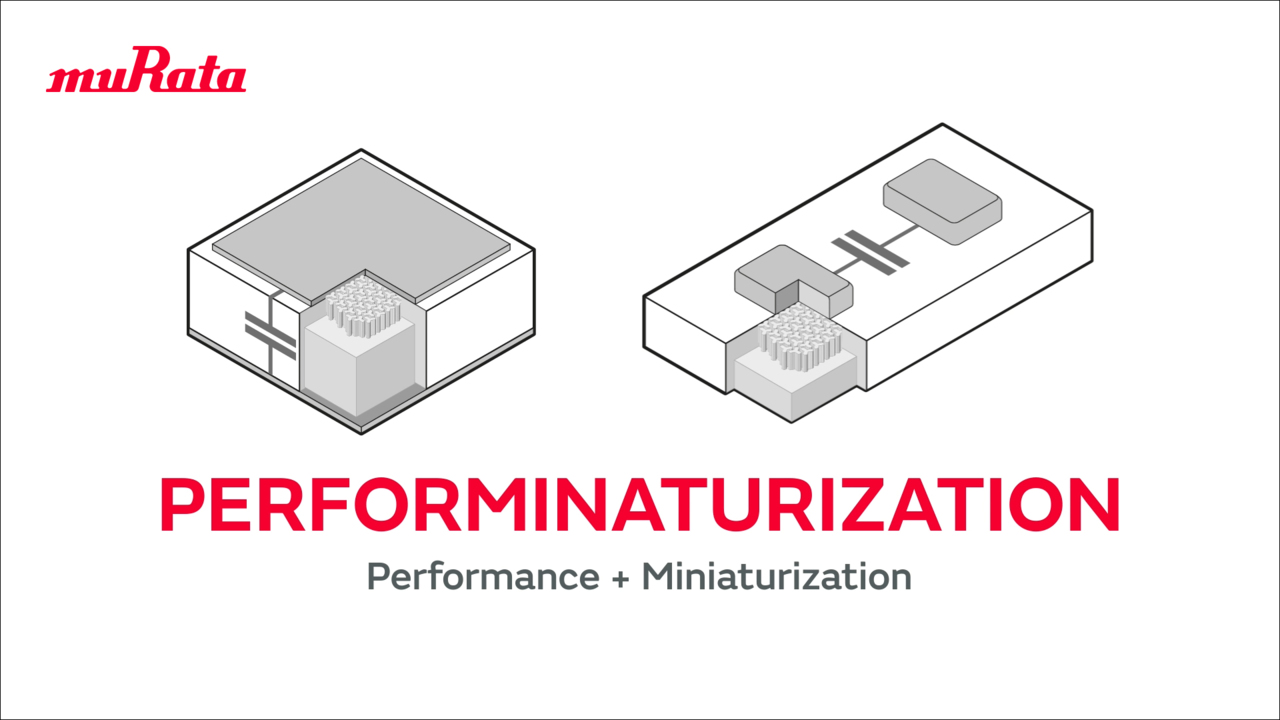
This video explains why does size matter. It shows Silicon Capacitor offer further performances thanks to their low x, y and z dimensions.
2:18
-
Play video Revealing the Cross Section View of Murata’s ECAS Series Capacitors! Looking at the capacitor structure to unravel the secret behind the high capacitance and low ESR
Revealing the Cross Section View of Murata’s ECAS Series Capacitors! Looking at the capacitor structure to unravel the secret behind the high capacitance and low ESR
What is the structure of the high capacitance and low ESR ECAS series polymer aluminum electrolytic capacitors? Let’s examine the strengths and design innovations of ECAS series capacitors by looking at their internal structure.
3:01
-
Play video “ECAS Series” Polymer Aluminum Electrolytic Capacitors
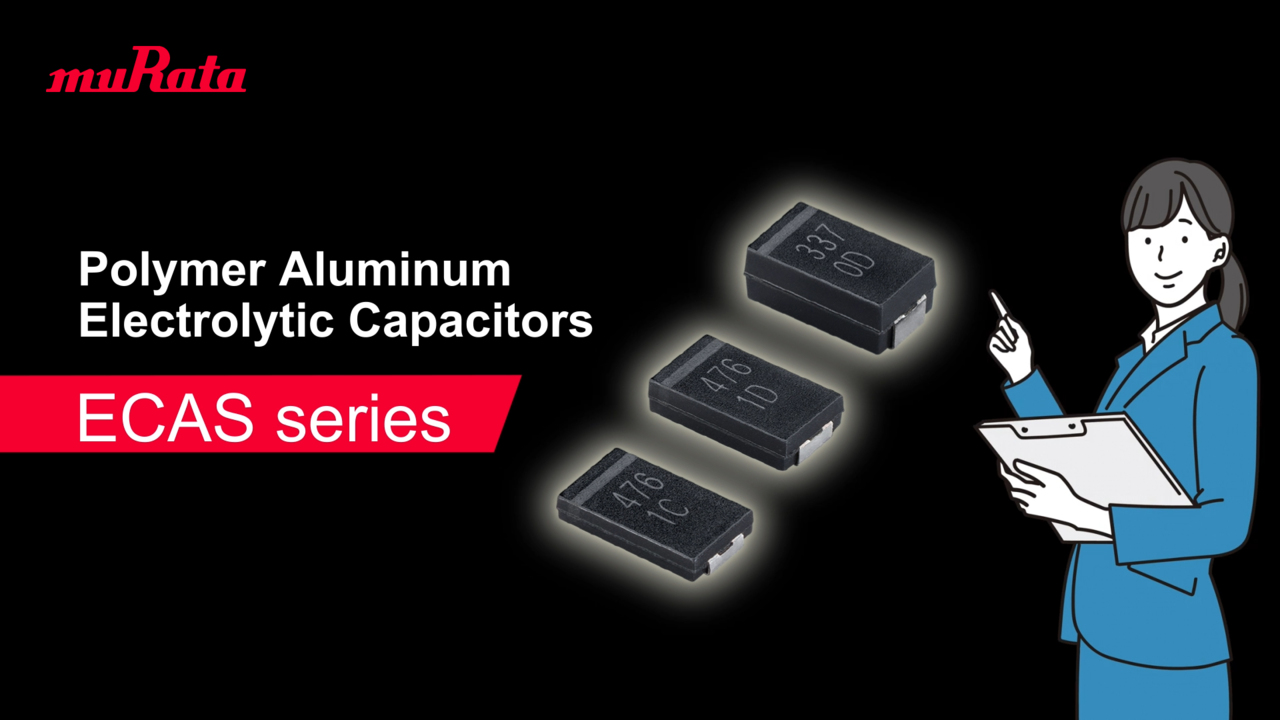
“ECAS Series” Polymer Aluminum Electrolytic Capacitors
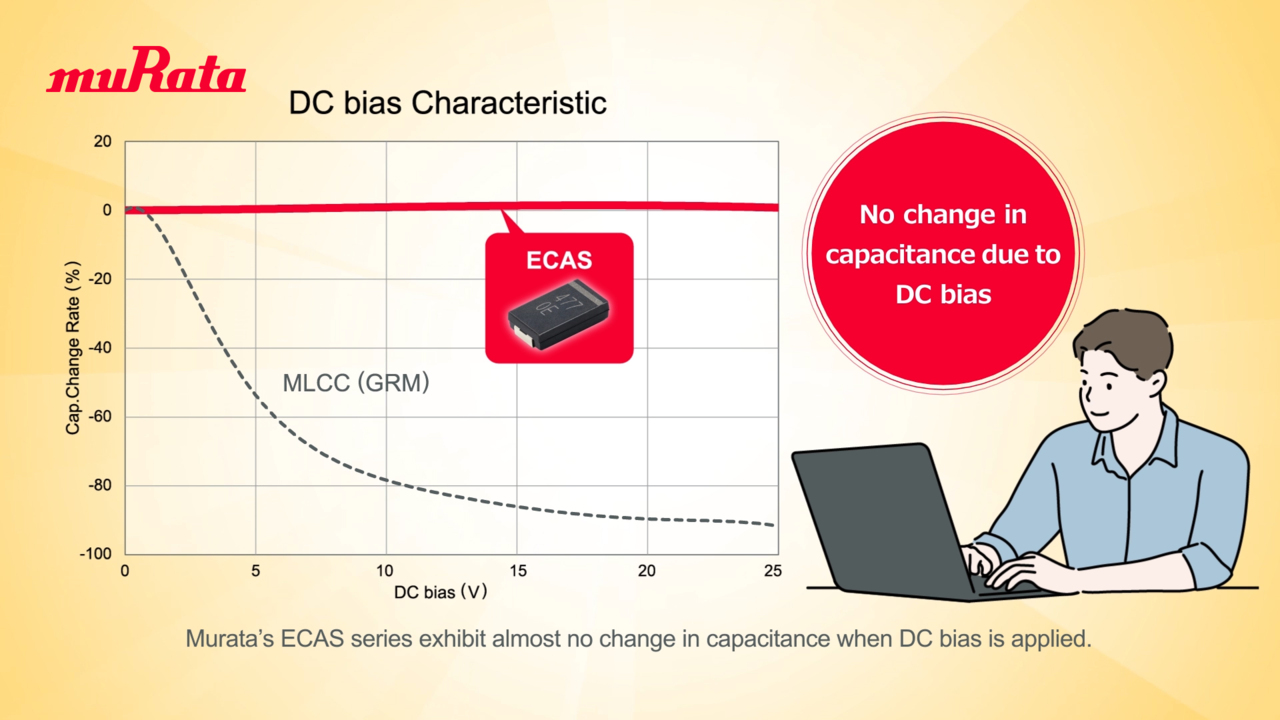
Let’s take a look at the high capacitance capacitor ECAS series with a maximum 470 μF that exceeds MLCC.
2:19
-
Play video Silicon Capacitor Generalities
Silicon Capacitor Generalities
This video explains the general information and features of Silicon Capacitor.
1:07
-
Play video Solving problems with the ECAS series: Acoustic Noise Reduction
Solving problems with the ECAS series: Acoustic Noise Reduction
Do you have any concerns, such as "The capacitors produce an unpleasant sound (noise is an issue)"? When using MLCC devices, the product may sometimes generate acoustic noise.
3:27