Direction-independent LF communication using a triaxial LF antenna
1:43
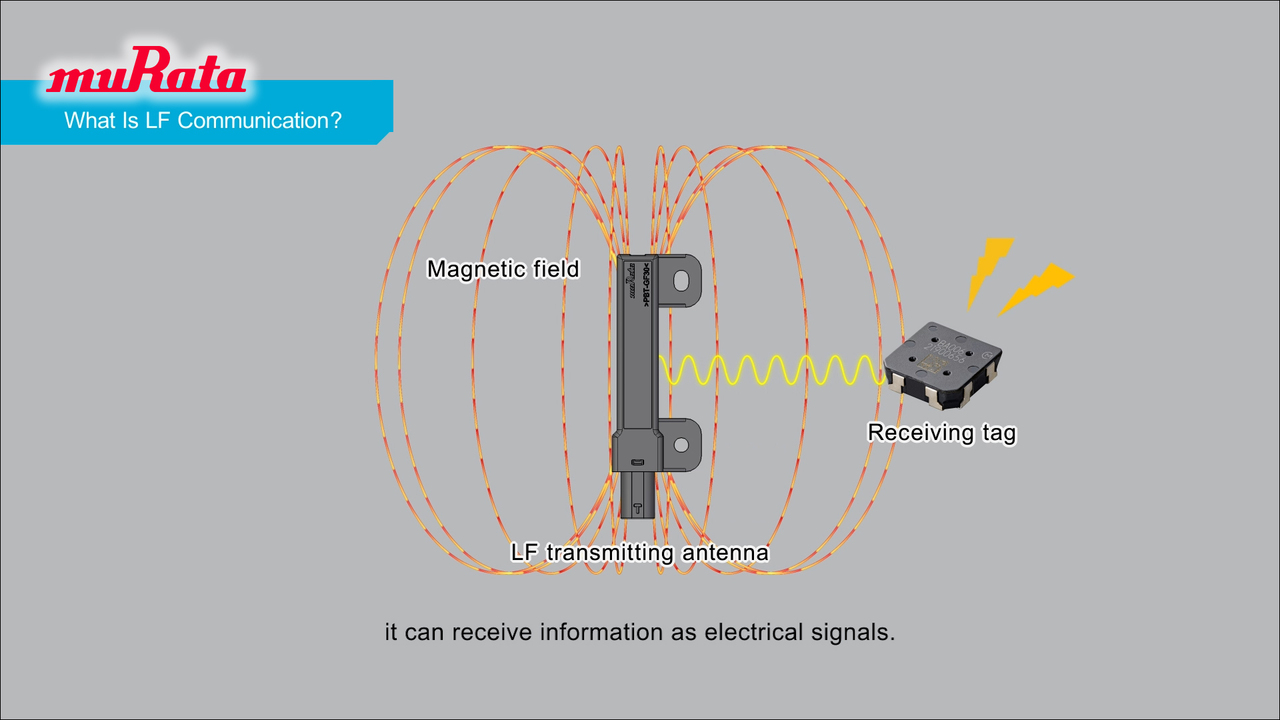
Using a Murata triaxial LF receiver antenna enables reception of signals from any direction, X, Y, or Z. This video shows how reception is possible without the direction having any effect. Devices using LF antennas can be placed in a bag, for instance, and receive signals from any direction.
Related Videos
In LF Antennas (Antenna Coils)
-
Play video Low Frequency (LF) Wireless Communication Using Murata's LF Antennas: Magnetic Field Communication Technology to Detect the Movement Direction of People and Objects at High Accuracy (Direction Detection)
Low Frequency (LF) Wireless Communication Using Murata's LF Antennas: Magnetic Field Communication Technology to Detect the Movement Direction of People and Objects at High Accuracy (Direction Detection)
Here, we take a look at the mechanism of detecting the movement direction of people and objects at a high accuracy by analyzing the changes in signal strength from two transmitting antennas. We also showcase usage examples. This technology enables si
1:30
-
Play video Demo of distance measurement using LF communication
Demo of distance measurement using LF communication
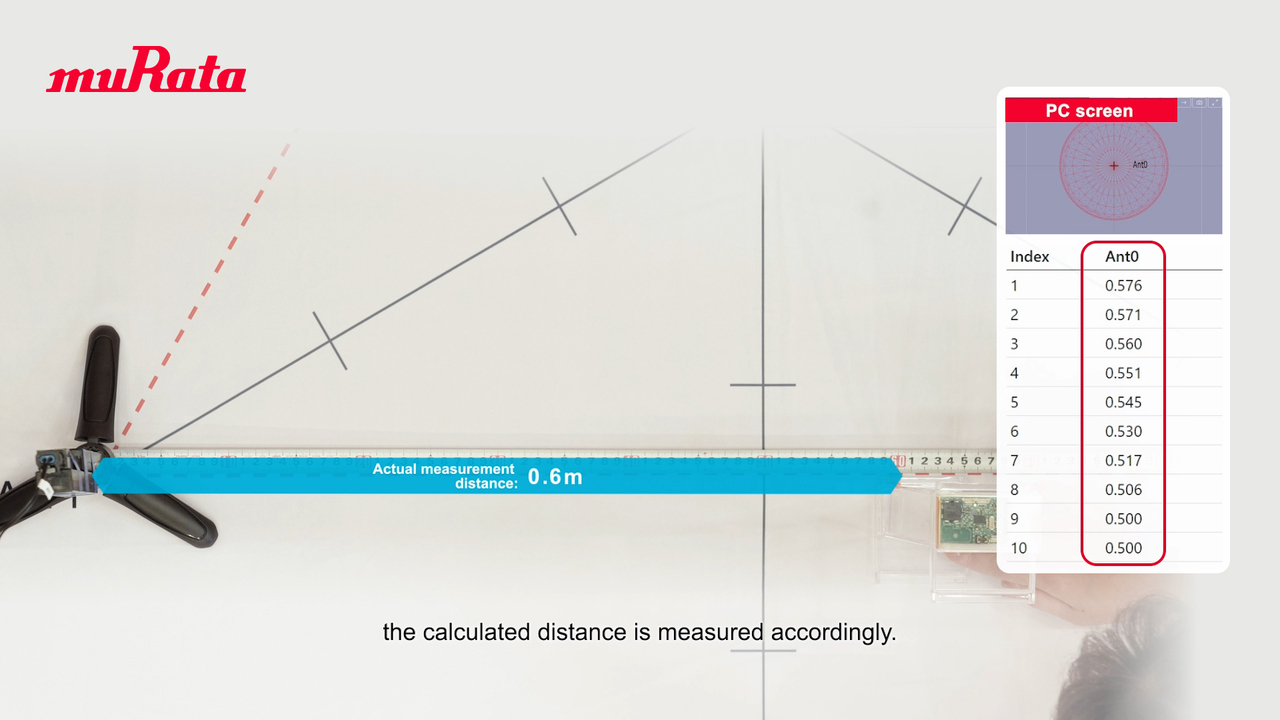
Murata LF receiver antennas can be used for distance measurement. The measurement accuracy is better than that with methods employing radio waves. Let’s see how it works.
1:21
-
Play video Low Frequency (LF) Wireless Communication Using Murata's LF Antennas: Highly Accurate Real-time 3D Position Measurement Using Triangulation (Real-time 3D Positioning/Location)
Low Frequency (LF) Wireless Communication Using Murata's LF Antennas: Highly Accurate Real-time 3D Position Measurement Using Triangulation (Real-time 3D Positioning/Location)
Here, we take a look at 3D position measurement technology that calculates the position (X/Y) and also the height (Z) at high speed and high accuracy through triangulation using three transmitting antennas. This technology can be applied to applicati
2:24
-
Play video Low Frequency (LF) Wireless Communication Using Murata's LF Antennas: Stable and Highly Accurate Distance Measurement and Position Detection Using Magnetic Fields (Magnetic Field Ranging & Positioning)
Low Frequency (LF) Wireless Communication Using Murata's LF Antennas: Stable and Highly Accurate Distance Measurement and Position Detection Using Magnetic Fields (Magnetic Field Ranging & Positioning)
Here, we explain about the basic principles and features of wireless communication using magnetic fields for low frequency (LF) wireless communication using Murata's LF antennas. We take a look at the benefits of this technology, such as offering sta
2:40
-
Play video Improving Factory Access Control and Evacuation Management | Implementation Manager Discusses LF Antenna Application Case Study [Okayama Murata Manufacturing]
Improving Factory Access Control and Evacuation Management | Implementation Manager Discusses LF Antenna Application Case Study [Okayama Murata Manufacturing]
Factory access control and evacuation verification require systems that are capable of accurately tracking the situation without impeding the flow of people. Murata’s LF antennas determine the direction of human movement with a direction detection t
2:39
-
Play video Demo of position detection using LF communication
Demo of position detection using LF communication
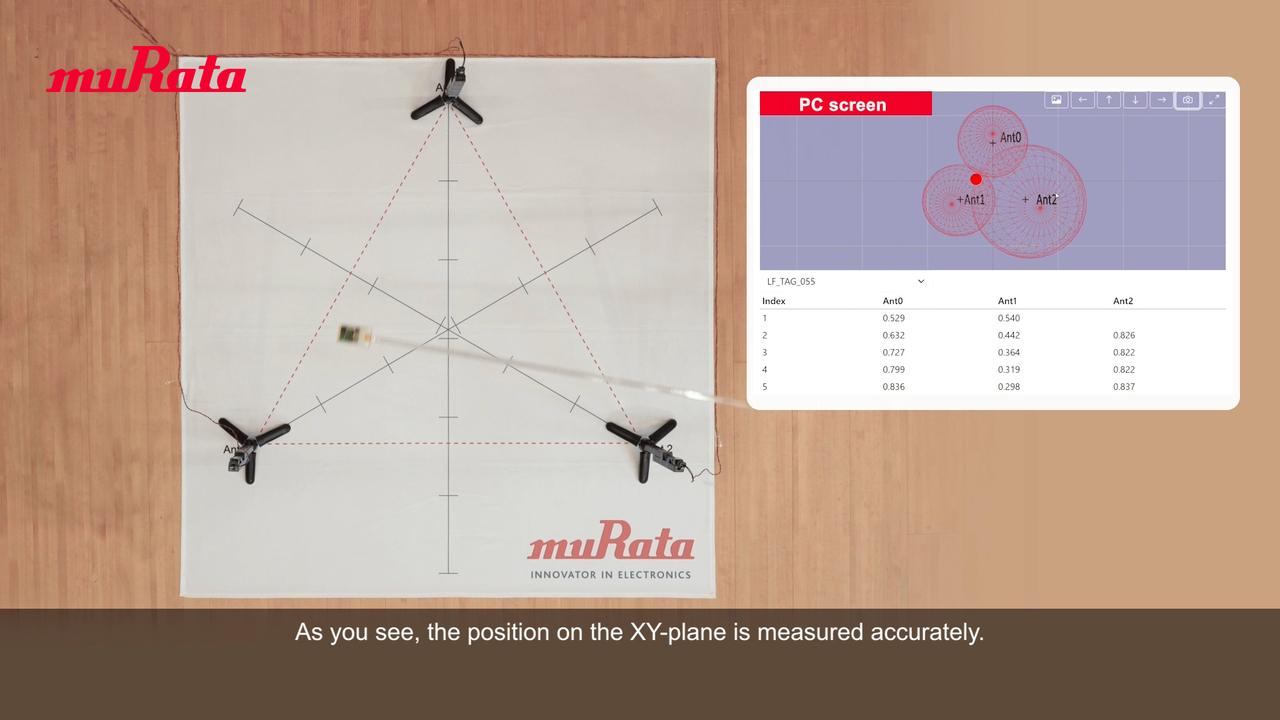
Murata LF antennas can be used for accurate distance measurement. By using three LF transmitter antennas in combination, it is possible to achieve more accurate position detection than that with existing methods employing radio waves. Let’s see how i
1:34