UWB Module Demonstration for UWB radar
2:01
The Type 2HQ UWB module supports UWB radar and Two-Way Ranging (TWR). This module simultaneously detects people via reflected waves and measures the distance to UWB devices, enabling high-precision sensing that does not rely on visual input.
Related Videos
In Connectivity Modules
-
Play video Murata’s Type 2GF Module
Murata’s Type 2GF Module
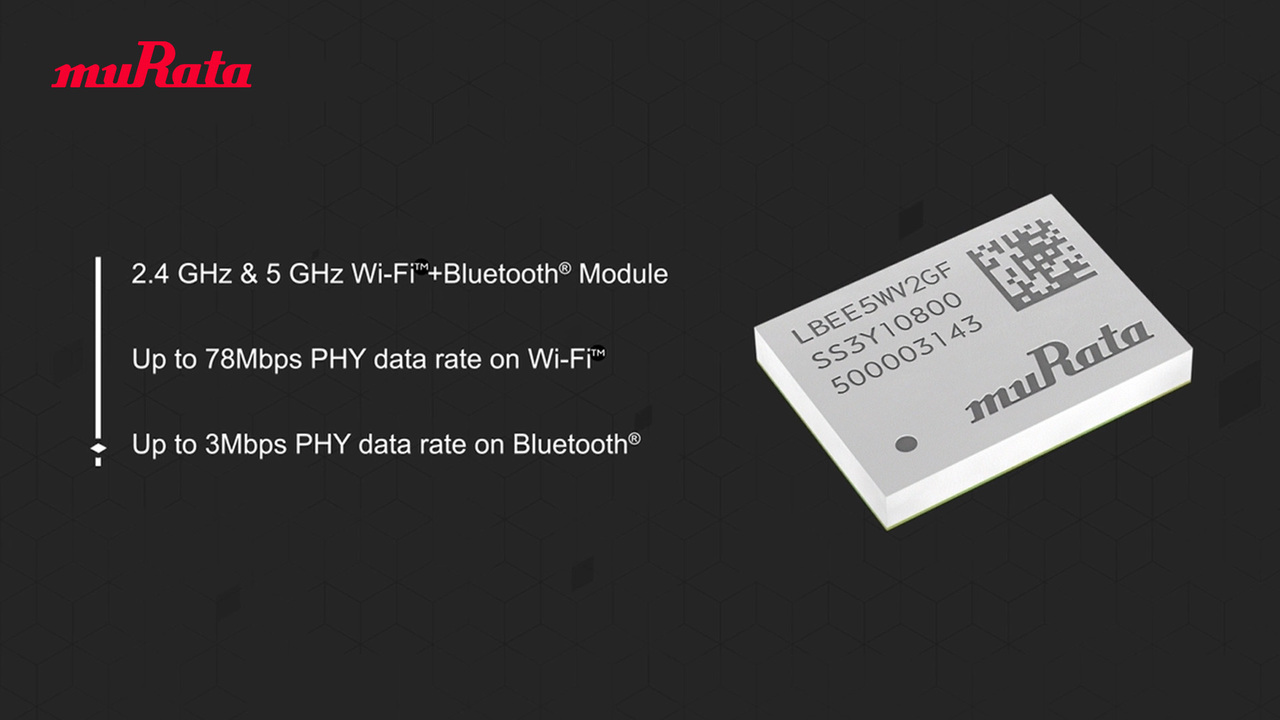
Type 2GF is a small and high performance module based on Infineon CYW43022 combo chipset which supports Wi-Fi™ 802.11a/b/g/n/ac + Bluetooth® 5.4 BR/EDR/LE up to 78Mbps PHY data rate on Wi-Fi™ and 3Mbps PHY data rate on Bluetooth®.
1:09
-
Play video UWB Module Demonstration for the access control with UWB
UWB Module Demonstration for the access control with UWB
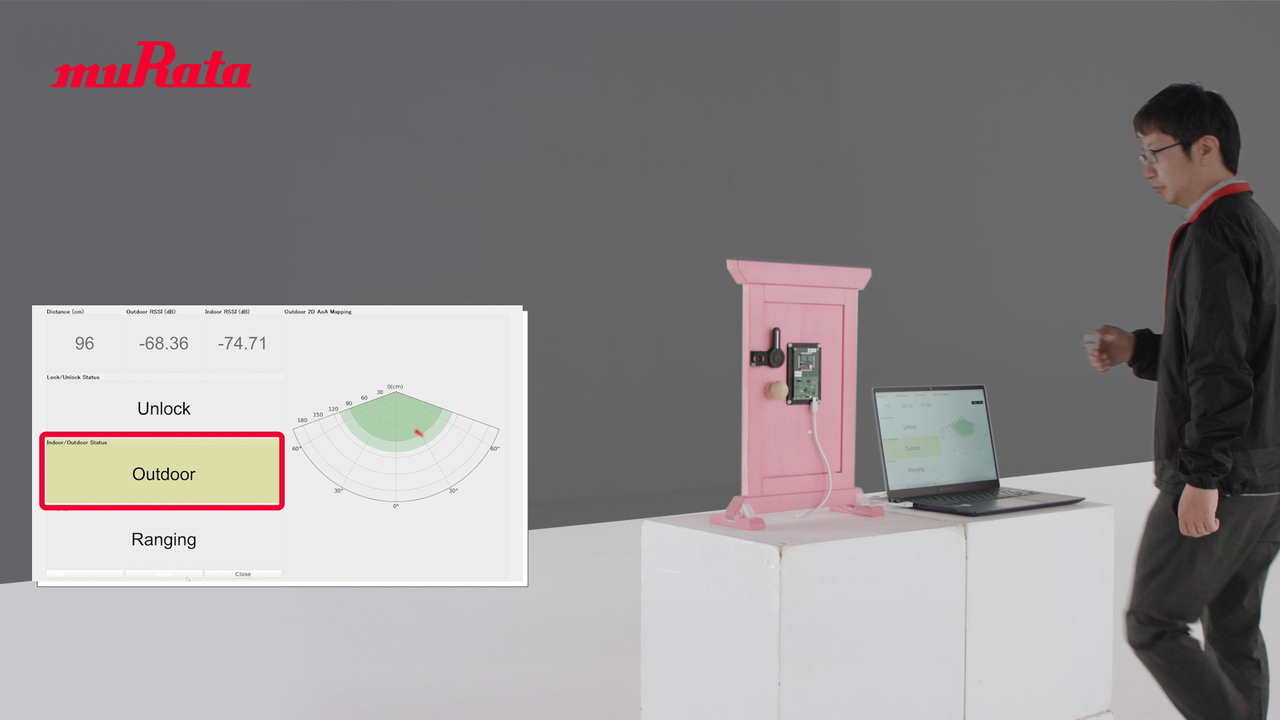
The video shows UWB communication between door and tag devices, enabling automatic lock/unlock based on the tag holder’s movement. Please consider this as a proposal for a new system for hands-free access management.
1:55
-
Play video Introduction to Murata's Wi-Fi HaLow™ Modules (Type 2HK/2HL)
Introduction to Murata's Wi-Fi HaLow™ Modules (Type 2HK/2HL)
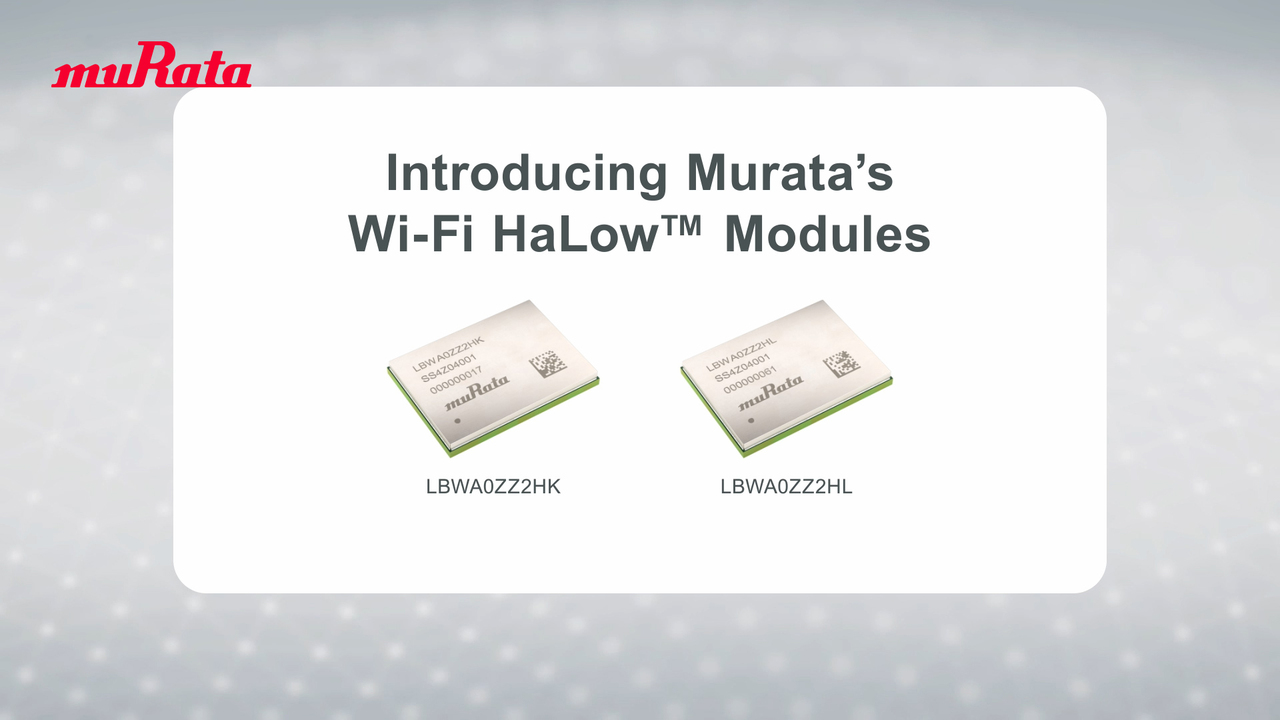
In this video, we take a look at the specifications and features of Murata's Wi-Fi HaLow™ modules (Type 2HK/Type 2HL). These products offer the high reliability required for industrial applications with a maximum output of +24 dBm (Type 2HK), enviro
2:26
-
Play video What Is Wi-Fi HaLow™ (IEEE 802.11ah)? An Easy-to-Understand Explanation of How Wi-Fi HaLow™ Differs from Other Standards
What Is Wi-Fi HaLow™ (IEEE 802.11ah)? An Easy-to-Understand Explanation of How Wi-Fi HaLow™ Differs from Other Standards
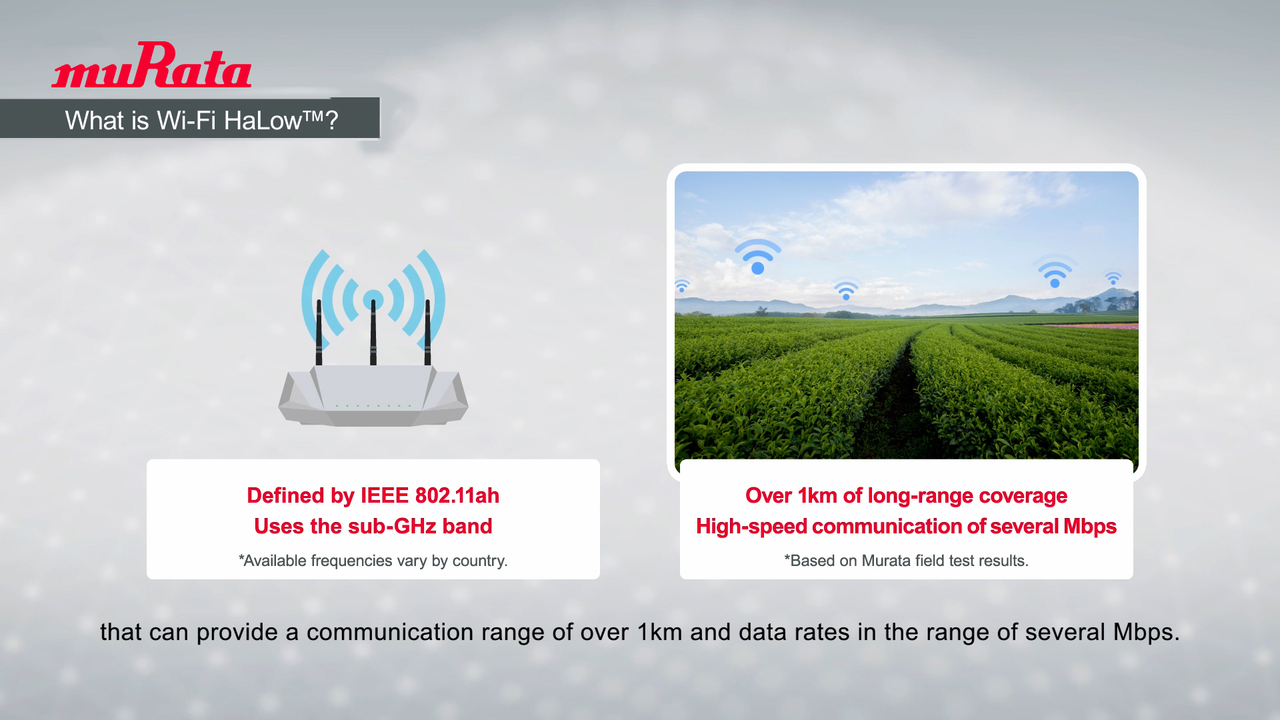
What Is Wi-Fi HaLow™ (IEEE 802.11ah)? In this video, we explain the positioning of Wi-Fi HaLow™ by clarifying how it differs from other communication standards. We also take a look at technical points such as Wi-Fi HaLow™’s modulation method, power-s
3:09
-
Play video Supporting Worker Operations Using Edge AI Cameras
Supporting Worker Operations Using Edge AI Cameras
Process monitoring using edge AI cameras supports digital transformation (DX) in the manufacturing industry. This system recognizes the movements of workers, detects mistakes, and analyzes workload without the need for the cloud. With its no-code AI
2:12
-
Play video UWB Module Demonstration of Automatic Tracking Using a Camera Platform
UWB Module Demonstration of Automatic Tracking Using a Camera Platform
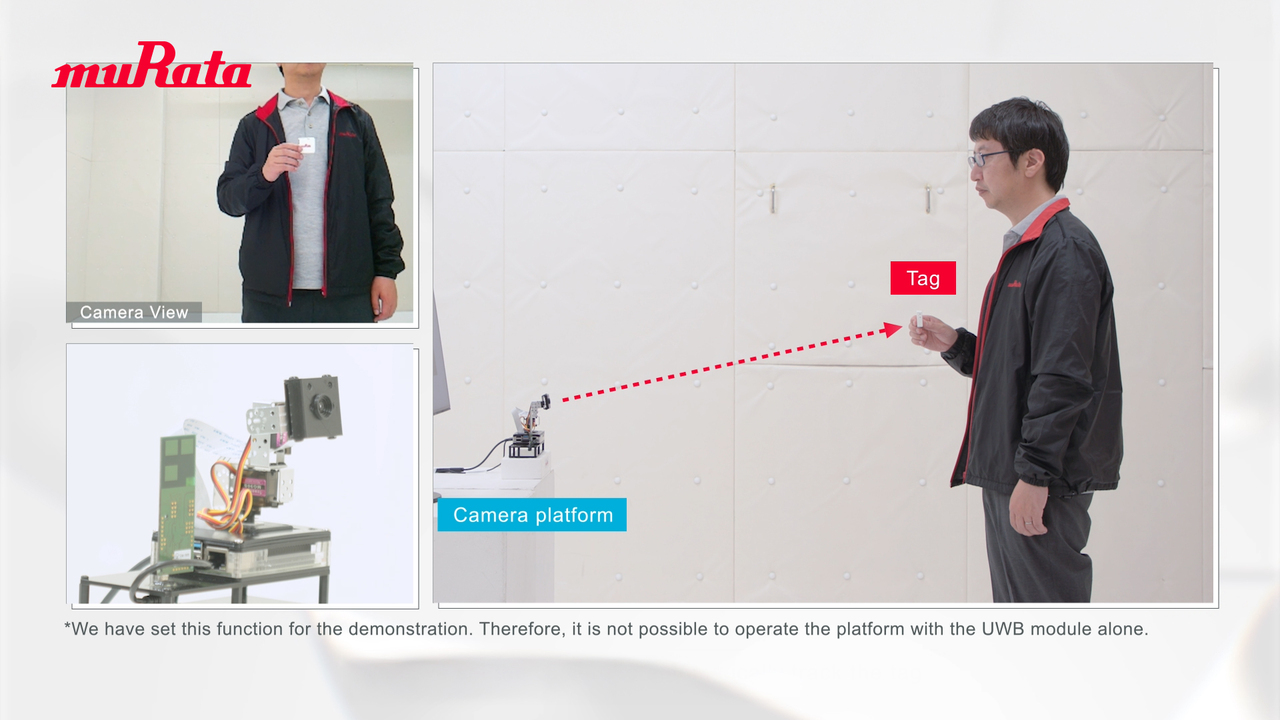
We present an implementation example of lightweight and high-precision automatic tracking using UWB-based distance and angle detection, addressing the CPU load and out-of-view loss issues commonly associated with ...
1:33