What Is Wi-Fi HaLow™ (IEEE 802.11ah)? An Easy-to-Understand Explanation of How Wi-Fi HaLow™ Differs from Other Standards
3:09
What Is Wi-Fi HaLow™ (IEEE 802.11ah)? In this video, we explain the positioning of Wi-Fi HaLow™ by clarifying how it differs from other communication standards. We also take a look at technical points such as Wi-Fi HaLow™’s modulation method, power-saving mode, and TCP/IP support.
Related Videos
In Featured Videos
-
Play video Streamlining Evacuation Status Tracking and Presence Management at Factories | Case Study of LF Antenna Implementation [Okayama Murata Manufacturing]
Streamlining Evacuation Status Tracking and Presence Management at Factories | Case Study of LF Antenna Implementation [Okayama Murata Manufacturing]
At factories and manufacturing sites, it is important to promptly verify evacuations, confirm safety, and track personnel in the event of a disaster. Murata’s LF antennas utilize direction detection technology through LF communication to determine t
3:47
-
Play video Murata RFIDs are blazing a new trail as they realize the future of next-generation smart inspections through embedded tire tags.
Murata RFIDs are blazing a new trail as they realize the future of next-generation smart inspections through embedded tire tags.
The work of inspecting tires places a burden on transport companies and dealers. With tires equipped with Murata's RFID tags, information such as the remaining tread depth can be centrally managed in the cloud by simply scanning the embedded tags. Th
1:35
-
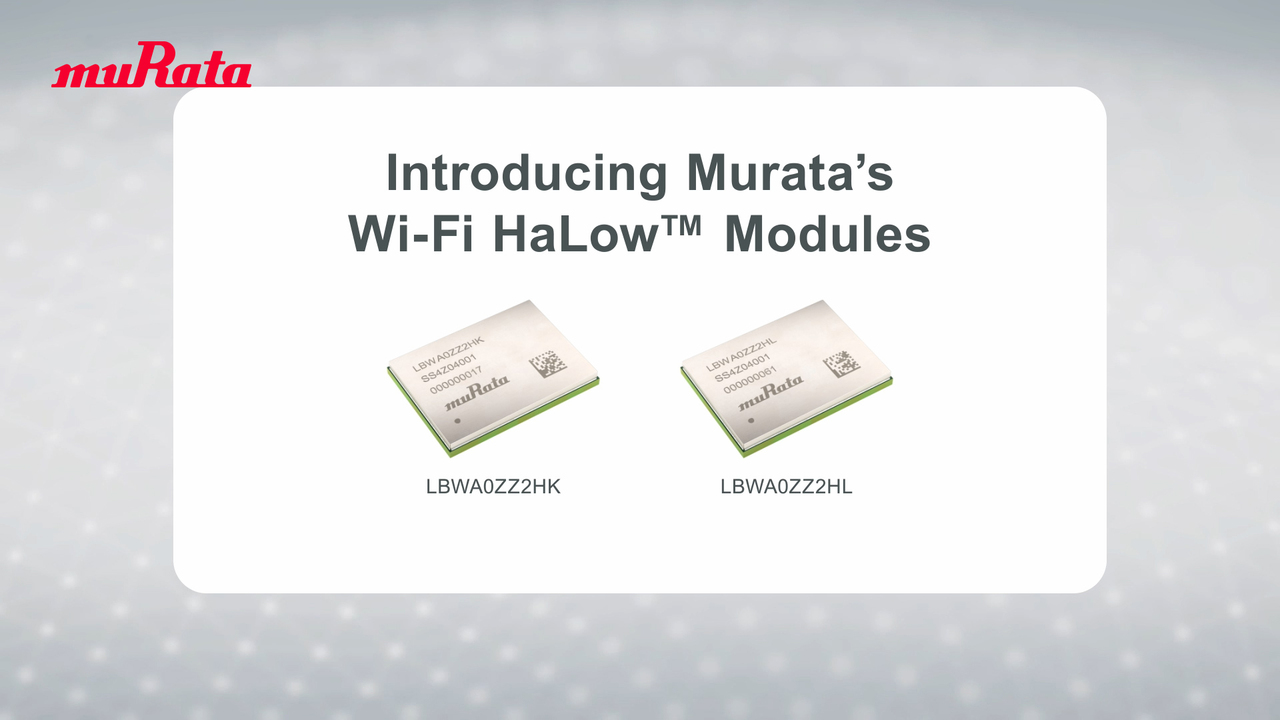
Play video Introduction to Murata's Wi-Fi HaLow™ Modules (Type 2HK/2HL)
Introduction to Murata's Wi-Fi HaLow™ Modules (Type 2HK/2HL)
In this video, we take a look at the specifications and features of Murata's Wi-Fi HaLow™ modules (Type 2HK/Type 2HL). These products offer the high reliability required for industrial applications with a maximum output of +24 dBm (Type 2HK), enviro
2:26
-
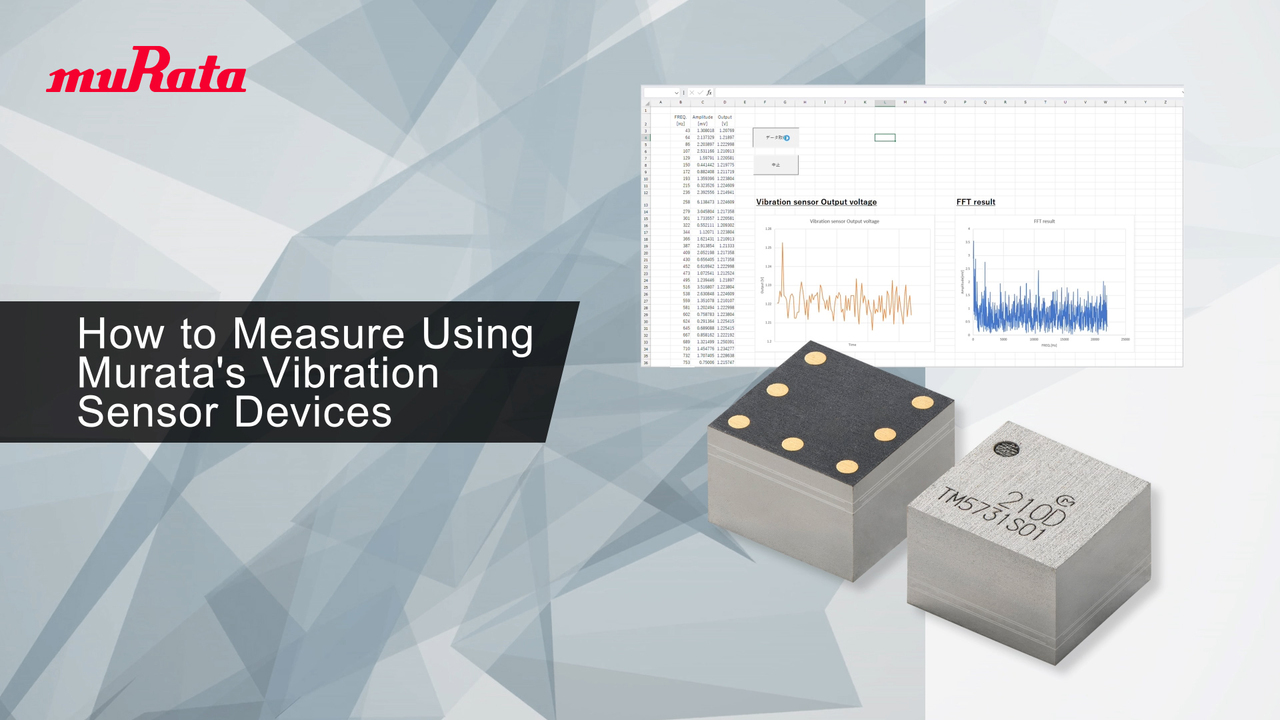
Play video [Usage Guide] How to Measure with Murata’s Vibration Sensor – Easily Acquire Vibration Data with the Evaluation Board –
[Usage Guide] How to Measure with Murata’s Vibration Sensor – Easily Acquire Vibration Data with the Evaluation Board –
This video provides an easy-to-understand explanation of how to measure vibrations using Murata’s vibration sensor with an evaluation board. The simple setup allows users to quickly begin vibration measurement with minimal preparation. Two types of e
2:06
-
Play video Improving Factory Access Control and Evacuation Management | Implementation Manager Discusses LF Antenna Application Case Study [Okayama Murata Manufacturing]
Improving Factory Access Control and Evacuation Management | Implementation Manager Discusses LF Antenna Application Case Study [Okayama Murata Manufacturing]
Factory access control and evacuation verification require systems that are capable of accurately tracking the situation without impeding the flow of people. Murata’s LF antennas determine the direction of human movement with a direction detection t
2:39
-
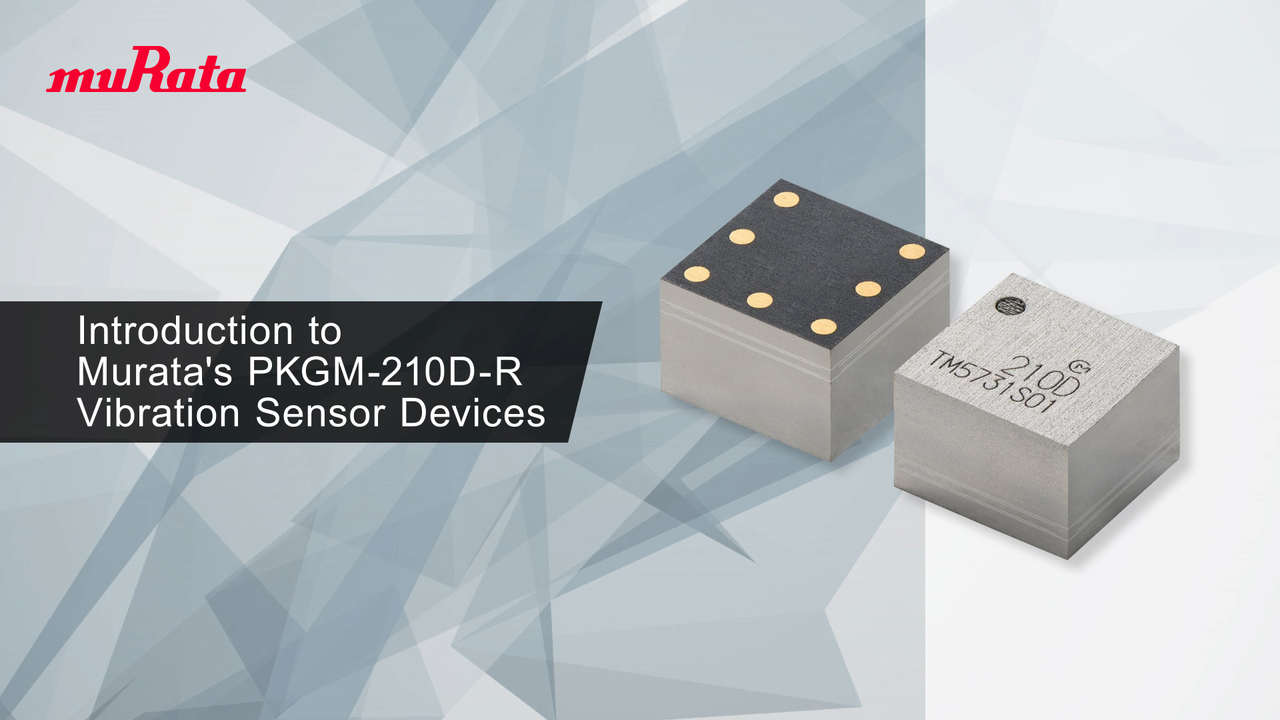
Play video Murata’s Vibration Sensor for High-Frequency Detection up to 20 kHz – Enabling Early Detection of Equipment Abnormalities –
Murata’s Vibration Sensor for High-Frequency Detection up to 20 kHz – Enabling Early Detection of Equipment Abnormalities –
Equipment often shows signs of failure—such as abnormal vibrations—before a sudden breakdown occurs. Murata’s vibration sensor detects high-frequency vibrations up to 20 kHz with a high signal-to-noise ratio, enabling early detection of abnormalities
2:44